.png)
Remembering What Was, Imagining What Could Be
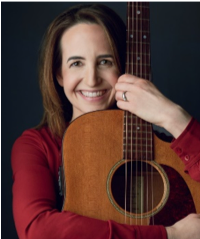
By Cantor Melanie Cooperman

Rosh Hashanah is filled with memories for all of us — crisp fall days, the taste of apples and honey, and the sound of the shofar. We gather together for Tashlich to cast away the year that was.
This year, Erev Rosh Hashanah falls on September 11th — the 25th anniversary of a day that conjures very different memories. Where were you when you heard the news? Who were you with? For so many — especially those who call New York home — that horrible morning is etched into our collective memory with painful clarity. Some of us lost people we loved. But most of us can remember the exact moment when we heard the shocking news.
Here at CSR, we talked quite a bit about how to balance the solemnity of the day with the hope that arrives with the new year.
Perhaps it’s an ideal time to revisit Rabbi Jonathan Sacks’ teaching about the difference between optimism and hope. In his book To Heal a Fractured World, he writes:
“Optimism and hope are not the same. Optimism is the belief that the world is changing for the better; hope is the belief that, together, we can make the world better. Optimism is a passive virtue, hope an active one. It needs no courage to be an optimist, but it takes a great deal of courage to hope. The Hebrew Bible is not an optimistic book. It is, however, one of the great literatures of hope.”
It's an interesting distinction. I know many of us feel not-too-optimistic about the state of the world right now, but we can still hope. Hope for ourselves, our families, and our communities. Hope for peace in the Middle East. Hope for a better 5787.
Hope is an integral part of Judaism. It’s not a coincidence that the Israeli national anthem, Hatikvah, means “The Hope.” It’s not a coincidence Rabbi Sacks wrote, “It is not too much to say that Jews kept hope alive, and hope kept the Jewish people alive.” He called hope one of Judaism’s greatest contributions to Western civilization and “the voice of hope in the conversation of humankind.” Throughout our history, we have never relied on passive optimism; we have chosen active hope in the face of our greatest challenges.
Judaism also asks us to remember. Zakhor — remember — appears again and again throughout the Torah. In fact, another name for Rosh Hashanah is Yom HaZikaron, “The Day of Remembrance.”
We must remember, even the painful things. But the Jewish concept of remembrance is not simply an exercise in nostalgia. Like hope, it is active. We recount the story of slavery in Egypt so that what happened in the past changes how we treat the stranger and the oppressed in the future.
This active memory is precisely what fuels our ability to build a better future. There is even cognitive science to back this up: recent studies show that many of the same neural pathways light up whether we are remembering the past or imagining the future. In Judaism, remembrance and hope belong together because remembering what was gives us the raw material to imagine—and actively create—what could be.
Take note of how often we look toward the future in these High Holiday services. Even as we spend these days reflecting on the year that was, we are constantly talking about the year to come. We will conclude Yom Kippur with the repeated refrain of wishing the next year to be a good one.
So, as we gather tonight, bring your memories and your grief alongside your gratitude and prayers. You do not need to choose between mourning what was lost and celebrating what is to come; our tradition has always made room for sadness and renewal to exist side by side.
As we enter 5787, let us support one another, honor our collective memories, and take Rabbi Sacks’ suggestion to step courageously into the active work of hope—a hope that brings our community, and our world, blessings and peace.
Wishing you a happy, sweet and healthy New Year from all of us at CSR.
Shana Tova and Shabbat Shalom,
Cantor Melanie Cooperman


