.png)
Rebuilding the World with Love
Erev Rosh Hashanah, 5787/2026
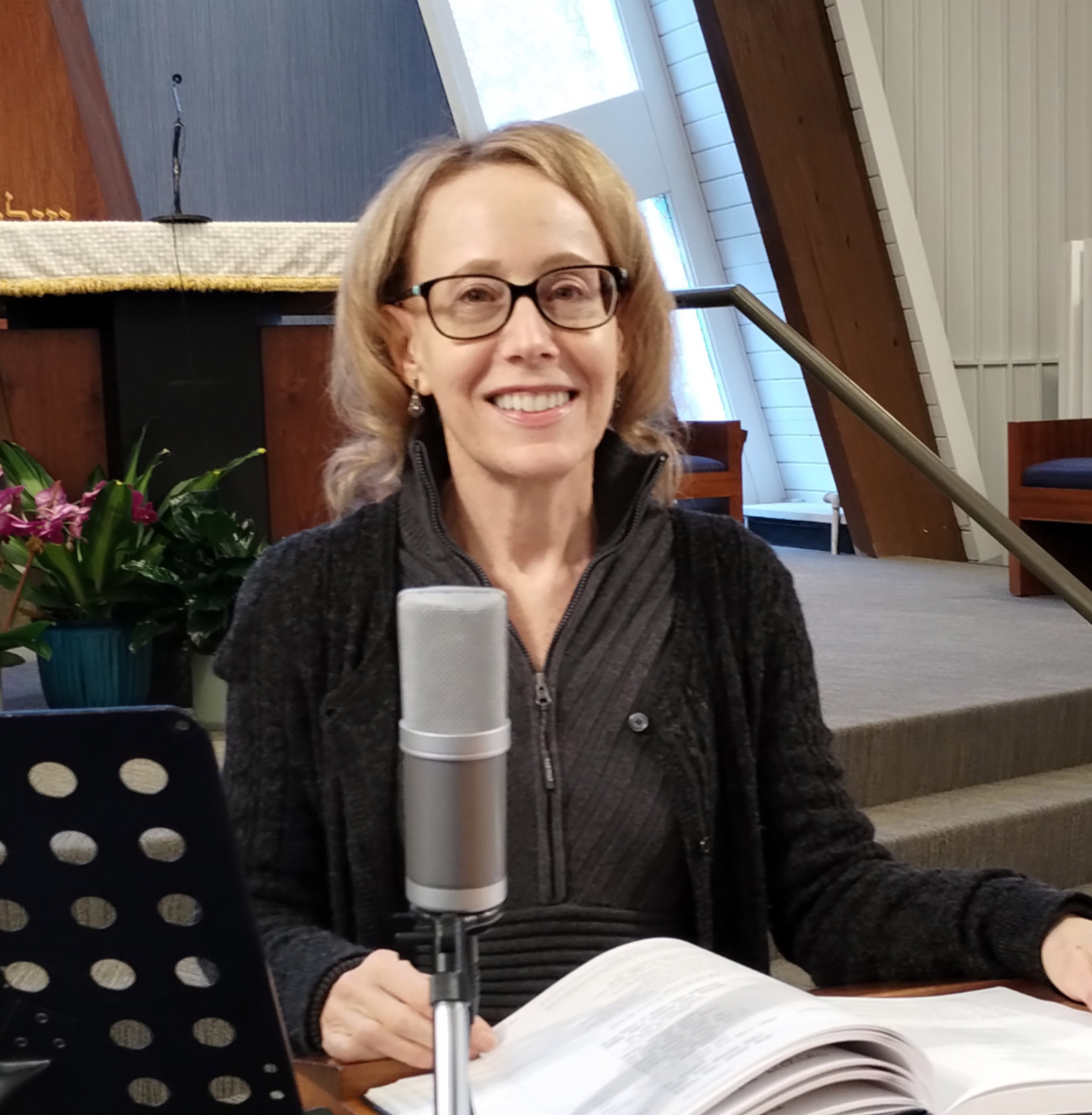
By Rabbinic Intern Lisa Schnapper
It was a little after 9:00 AM when my mother called to ask if I had the TV on. She sometimes called at that time to tell me to put on Regis & Kelly, but I could tell from the tone in her voice that this was different. “A plane crashed into the World Trade Center,” she said. Like those who remember where they were and what they were doing when JFK was shot, those of us who witnessed the unfolding horror and tragedy of 9/11 will never forget—never forget the shock, the smoke, the grief, the indignation.
The fact that I wasn’t in diapers and that I can stand here before you— and with you—in shared grief and memory of the horrors of 9/11, should not go unnoticed. Yes, this rabbinic intern looks a little different this year. I am.
Like many of you, I vividly recall that Tuesday morning, twenty-five years ago today when 2,977 people lost their lives across Lower Manhattan, the Pentagon, and a field in Shanksville, Pennsylvania—and the world as we knew it changed. Like many of you, I remember watching those massive, concrete towers—symbols of strength, security, and permanence—crumble into dust in a matter of hours.
For me and for most of you in this room, that morning wasn't a chapter in a history book; it was a line drawn through our adult lives. We watched our physical infrastructure collapse, and with it, our collective sense of invincibility. It birthed an era of heightened fear, geopolitical instability, a war on terror, and a deep domestic polarization that we are still navigating today.
With all this turmoil and trauma, we need experienced people who can step into Jewish leadership roles—right now. The world is changing too fast to wait ten—or even five—years for more seasoned leaders. This is not to diminish the importance of our young, up and coming rabbinic leaders, who are essential for securing our future. We need their passion and energy. But to meet the need this moment demands, Hebrew Union College created a program specifically for experienced professionals who could step right into rabbinic leadership roles. I am honored to be one of them.
Jewish tradition teaches that there are no coincidences, that coincidences are subtle messages from G-d, inviting us to pay attention. The fact that the twenty-fifth anniversary of 9/11 falls on the arrival of Rosh Hashanah and on Shabbat, offers us a powerful message. Rosh Hashanah—also called Yom HaZikaron—is the Day of Remembrance. Tonight, our national day of mourning meets our sacred day of remembrance. Tonight, we don’t just look back to grieve; we look back to remember who we are, how we survived, and what we are called to rebuild.
Think back twenty-five years.
We didn't have smartphones in our pockets. There was no Facebook, no Instagram, no TikTok. Back then, we were still using dial-up internet and waiting to hear the words "You’ve Got Mail!" Imagine the terrifying, immediate images we would have seen if everyone had a smartphone on 9/11. So, we adapted to negativity. We built walls. We institutionalized a culture of suspicion, accepting regulations like taking off our shoes at airport security.
But the deepest change did not happen at airport gates; it happened in our minds and in our hearts. The rise of the internet and social media did not bring us closer together, it tore us apart. It has led to deep distrust—distrust of anyone, any idea, or any perspective that runs counter to our own. Instead of welcoming the stranger, we view our neighbors as threats.
We have spent twenty-five years letting external, negative forces build a world of cynicism and isolation. The blast of the shofar tonight is not just a wake-up call for our souls; it is a call for right-action. A call to rebuild from the rubble of 9/11; to build a world we want to live in and that we want our children to inherit.
As with most tragedies, 9/11 inspired a wave of artistic expression, including music, that captures both grief and resilience. One song, Olam Chesed Yibaneh, was quickly embraced as a modern Jewish anthem. Written by Rabbi Menachem Creditor in the early months following 9/11, he had originally wanted to compose a song to celebrate his daughter’s birth, but in the wake of grief and destruction, the concept for the song changed. As he describes it, he was walking down Broadway in lower Manhattan, cradling his newborn daughter, looking out at the empty skyline, and wondering—how he could possibly raise a child in a world where everything could collapse. What positive message, he wondered, could he leave his daughter? From that, a prayerful song emerged: first, the melody and then a verse from text.
“There was an urgency that coursed through me,” he said. “Building this world from love isn’t a choice we get to make, it’s an obligation to see this world as worth it, and to see every human being as a partner in making that happen.”
In rabbinical school, just as our sages have been doing for centuries, we examine texts to uncover deeper meaning. We can do the same with Rabbi Creditor’s song.
Olam Chesed Yibaneh comes from Psalm 89:3 and translates to “The world is built with Chesed, with kindness, with unearned love” In this context, the verse is passive and is attributed to G-d. G-d alone has agency. But in Rabbi Creditor’s version, we humans have agency. He shifts the responsibility directly to us. To me…and to you.
Olam Chesed Yibaneh lays out a four-step path for rebuilding, one that can serve as a path through these Days of Awe and beyond, into the year ahead:
Step 1. Start with the Self: “I will build this world from love…”
Modern news sources feed our anxieties—making us feel helpless, defensive, and isolated in our own heads. Rabbi Creditor’s song teaches that building a better world doesn't start from the outside—by changing the internet or the government; it starts from the inside, with personal agency. We must choose to regulate our own heart; to decide that our primary output into the world will be chesed—loving-kindness. But how? Smile at a stranger. Offer to help someone who looks lost. Make helping others, a life attitude.
Step 2. It’s not just about the Self; it includes the Other:
“And you must build this world from love…”
We cannot build a world alone. This step requires that we look at the person right in front of us—even, and especially, if they view the world differently—and invite them to meet us in a space of mutual respect. How might we do this? Perhaps when we look at others, we can quietly say, “made in the image of G-d.”
Step 3 unites us as “We”: “And if we build this world from love…”
“We” creates community. This is the collective action phase where real change happens—where defensive security structures are replaced with proactive communal care. You can volunteer to drive someone to a doctor’s appointment. Right here in our own community, you can sign up to mentor a younger person through our Gesher L’Kesher program, or start a small group based on an interest. There are so many opportunities for building community.
Step 4 unites us in partnership with G-d: “…Then G-d will build this world from love.”
Rabbi Yitz Greenburg, one of our great sages, now in his nineties, teaches that repairing the world (Tikun Olam) requires an active, equal partnership between humanity and G-d—G-d has given us agency and the responsibility to care for this world. In fact, Jewish tradition teaches that Rosh Hashanah actually marks the sixth day of creation—the day when G-d created human beings. Human beings were created last. Why? To serve as caretakers to the natural world, and to each other. A Midrash paints a visual picture of this:
First, G-d gives Adam a tour of the garden, pointing out the trees and plants. Then G-d says, “Look at My works, how beautiful and perfect they are! All that I have created, I created for you." But unlike those tour buses where all they ask in the end is for a gratuity, G-d asks something more profound of Adam—of us. G-d says, “Be mindful that you do not ruin and destroy My world; for if you ruin it, there is no one to repair it after you.”
You may be thinking, “Aren’t these just lofty ideals? How can we love those who murder and are out to destroy us?” Yes, love is a highly charged word, a difficult word to grasp. Meriam-Webster tells us that love is “a strong feeling of deep affection, attachment, or devotion to another person, animal, or thing.” But what if we expand that definition, and instead think of love as the highest version of ourselves—the version created in the image of G-d? The version who rises above and sees the oneness of humanity? How would that version respond? The only way to find out is to put it into practice. We already know that the old way—the way of fear and hatred—has not, and will not, work.
So we sing: Olam Chesed Yibaneh. Not once, not twice but until love surrounds, penetrates and binds the universe together.
The world will not fix itself. Peace and Transcendence will not just drop from the sky to fix our broken world.
Peace and Transcendence will be mirrored back, only after we do the hard, messy work of building the foundation together.
And so we come to where tonight must end — not with an answer, but with an invitation.
We cannot bring back the 2,977 souls who perished in the towers, at the Pentagon, in that field in Shanksville — no speech, no prayer, no act of will on our part can reverse that. The smoke has long since cleared, but the absence remains, permanent and unfillable. To pretend otherwise would be to dishonor them.
But here is what we can do, and what I believe this day asks of us: we can choose, together, to rebuild — not the towers, but the world. Not the same world that existed before 9:00am that Tuesday morning, but one shaped by what we learned in the wreckage: that we are fragile, that we are interdependent, and that the only force that has ever truly held a community together through catastrophe is love — the unglamorous, daily kind of love.
This story was passed down by the great Rabbi Chaim of Stanz:
There once was a man who found himself lost, in a dense forest. The trees closed in around him. Every path looked the same. He could not tell north from south, could not find his way home. And in that disorientation, in that very lostness, he encountered another man. “Do you know the way out of the forest?” the first man asked. “I do not,” he replied, “I am also lost. But I can point out the paths that lead deeper into the forest. Perhaps together we can find a new path that will lead us out.”
That is where we are today. We are still in the forest. The fear, the polarization, the sense that the ground will shift beneath us at any moment — has not receded; it is very much alive. But we do not have to find our way out, alone. Together, we can we find the way forward.
G-d waits for us to make the first move.
Today, on this sacred Day of Remembrance, let us remember and renew our partnership with G-d—and then sign it, with Love.
“If we build this world from love, then G-d will build this world from love.”
Shana Tova.
